
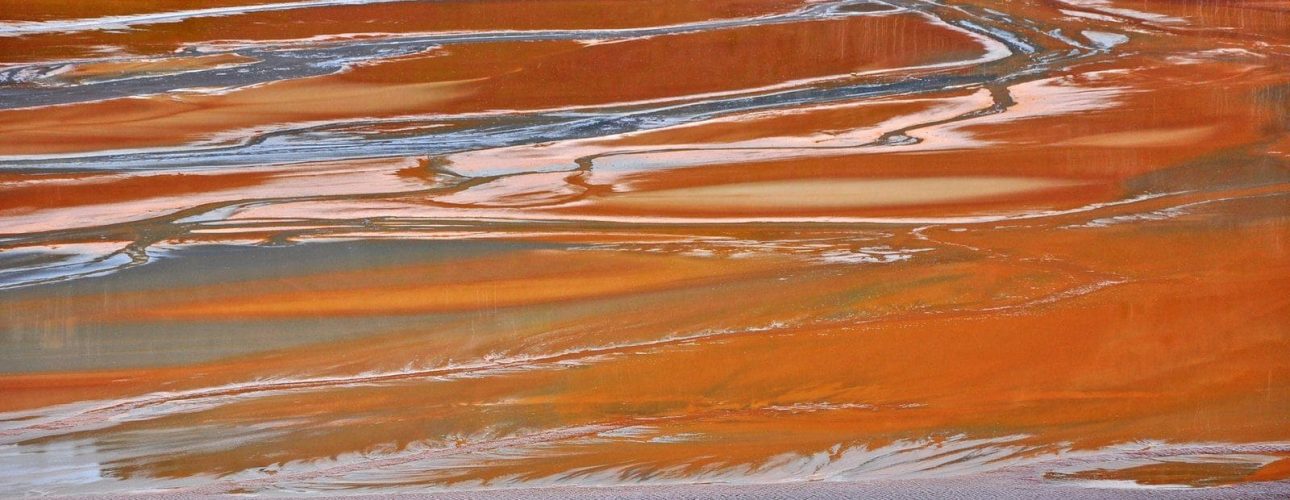

Mining is an everyday economic activity in an industrialized society, but it entails undeniable negative impacts on the environment. Water pollution is primarily associated with mining operations as mining threatens all kinds of waterways, from rivers and lakes to drinking water supplies. It is of significant concern as all lifeforms are dependent on water, and in order to sustain life, there must be fresh and potable water. Unfortunately, the activities of mining deteriorate water quality and quantity. Below are some of the effects of water pollution from mining that require environmental characterization.
Water Pollution Effects that Require Environmental Characterization
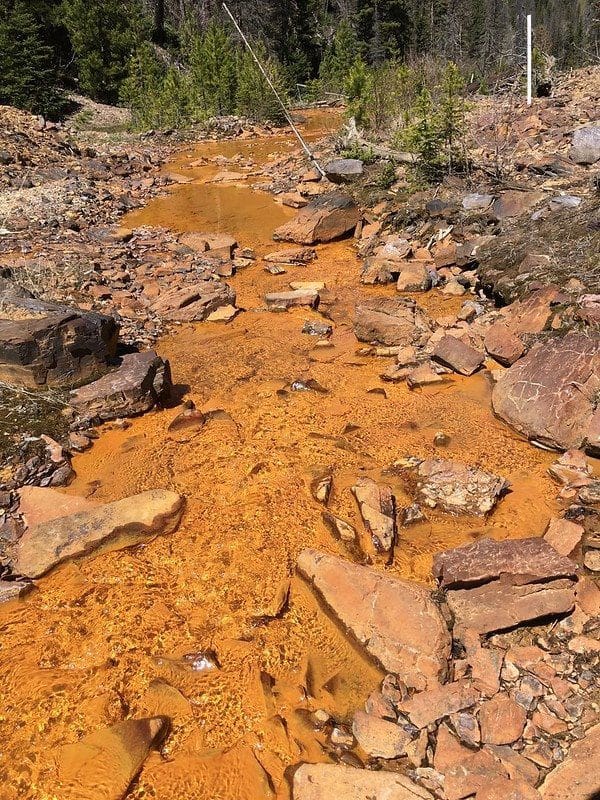
Acid Mine Drainage
Acid rock drainage (ARD) or acid mine drainage (AMD) is a natural process where sulfides in rocks from an open-pit reacts with water and air to produce sulphuric acid. Once the water reaches a certain level of acidity, the process is enhanced by a bacteria called Thiobacillus ferrooxidans, accelerating both the acidification and oxidation processes. The acid is then carried away from the mining area through surface drainage or rainwater.
The resulting fluids are hugely toxic, and when combined with groundwater, there is a high risk of loss of aquatic life and restriction of stream use for recreation, public drinking water, and industrial water supplies, making the water virtually unusable. AMD usually comes from currently active mining and abandoned coal mines. It is also considered as one of the significant water contaminants in the mid-Atlantic region.
Heavy Metal Contamination
Heavy metal pollution is caused when such metals as cobalt, arsenic, copper, zinc, lead, cadmium, and silver exposed in an underground mine or contained in an excavated rock come in contact with water.
Mainly, non-essential heavy metals like gold and mercury are of no biological significance to living organisms. However, they are highly toxic when digested. A trace amount of heavy metals may be found in sources of water and could still be a potential threat and impose serious health problems both on humans and other aquatic life. Humans are more prone to serious health problems because the concentrations of heavy metals increase in the food chain.
Sedimentation and Erosion
Mining that involves removing earth and scraping away rocks to get the coal buried near the surface leads to the destruction of agricultural lands and erosion of soil. Plants, trees, and topsoil are scraped away from the mining area and destroys wildlife habitats and landscapes.
When these mining sites experience heavy rain, the loosened topsoil is washed away, carrying sediments that may pollute the streams, lakes, and rivers. Excessive residue can harm aquatic organisms and watershed vegetation downstream. Moreover, it can also cause disfiguration of streams and river channels, which results in flooding.
Processing chemicals pollution
Mining companies generally use chemical compounds such as sulphuric acid or cyanide to separate their respective target minerals from the ore. Contamination occurs when these chemicals are leached, leaked, or spilled from the mining area into the nearby bodies of water. These chemicals are highly toxic and could lead to loss of life on wildlife species and severe health concerns on the human body.